SU5000 vs QHFS1860: Which Automatic Photo Album Making Machine Fits Your Production?
Choosing an automatic photo album making machine is easier when you start with the work coming through your shop.
If most of your orders are standard-size LayFlat photo albums, you may need a machine that handles daily production reliably without taking up too much floor space or requiring a large initial investment. But if you are receiving larger album orders, producing thicker book blocks, or trying to increase output without adding more manual handling, your priorities may be different.
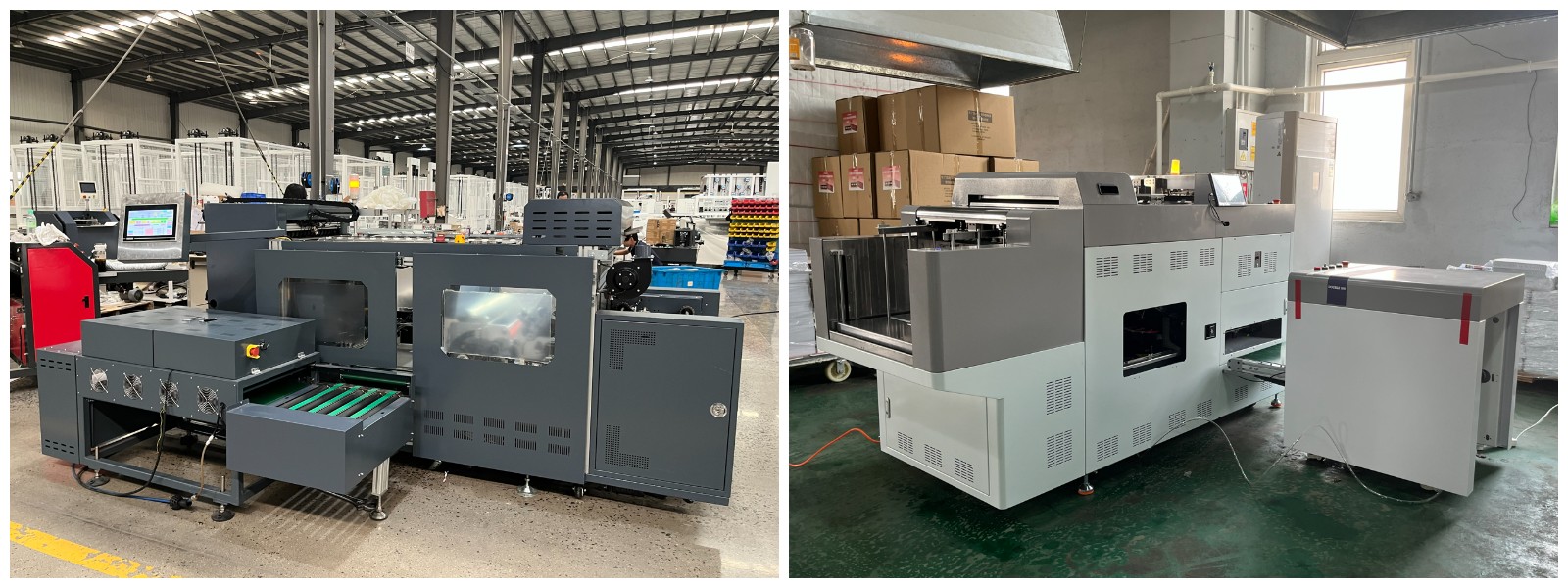
The Double100 SU5000 and QHFS1860 both produce LayFlat book blocks from printed photo paper. The difference is how each machine fits into your production workflow. The SU5000 is designed for higher-volume production, larger formats and thicker blocks, with three-side trimming integrated into the line. The QHFS1860 is a more compact option for smaller production spaces and mixed orders within its working range, with trimming handled separately.
Before comparing rated speeds, consider three questions: What is the largest album size you need to produce? How thick are your book blocks? And how much time does your team spend changing jobs or moving semi-finished products between operations?
Your answers will help you identify which machine makes more sense for your current orders and your next stage of growth.
The short answer • Orders past 18×18 in, blocks past 40 mm, or 2,500+ albums a month: SU5000. • Work between 6×6 and 18×18 in, 500–1,500 albums a month, tight floor space: QHFS1860. • Unsure? Price your last ten orders by size and thickness — one column comes out empty. |
Specifications Side by Side
Rated figures from the manufacturer. What you get depends on album size, material and how steady your feeding is.
Parameter | SU5000 | QHFS1860 |
Rated speed | 1,800 cycles per hour | 600 sheets per hour |
Output, 10×10 in, 10 pages | ≈150 book blocks/hour; ≈80 with inserts | ≈60 book blocks/hour |
Album format | 6×8 to 18×25 in; max 53 × 35 cm | 6×6 to 18×18 in; blocks to 457 × 457 mm |
Block thickness | 6–70 mm | 6–40 mm with cardboard inserts |
Registration | Integrated barcode reading | CCD camera with automatic alignment |
Three-side trimmer | Integrated in the line | Off-line trimming |
Inserts | Cardboard and PVC, hot-melt bonded | 60 mm stack, selectable insert count |
Footprint | ≈6.6 m² | ≈2.2 m² |
Net weight | 1,500 kg | 650 kg |
Power | 220 V / 50 Hz single phase, 3,000 W | 3–3.5 kW |
Relative price | ≈30% higher | Baseline |
Output: What You Can Actually Feed
Rated speed is a ceiling you only touch when nothing changes: 1,800 cycles an hour on the SU5000, 600 sheets on the QHFS1860 — about 150 ten-page 10×10 blocks an hour without inserts and 80 with them, against 60. Over a seven-hour shift that is 560 against 420.
Then look at your own day. Change size every twenty albums and the gap shrinks to whatever your setup takes, because prepress, loading, glue warm-up and packing cost the same on both. Run one size for a week and the SU5000 pulls away: two books side by side below 18×12 inches, and a barcode reader that takes registration from the job file instead of the operator's eye.
Either machine runs with one operator; on the SU5000 that operator feeds and packs, on the QHFS1860 they also carry blocks to the trimmer.
Formats and Block Thickness: The Limits You Cannot Argue With
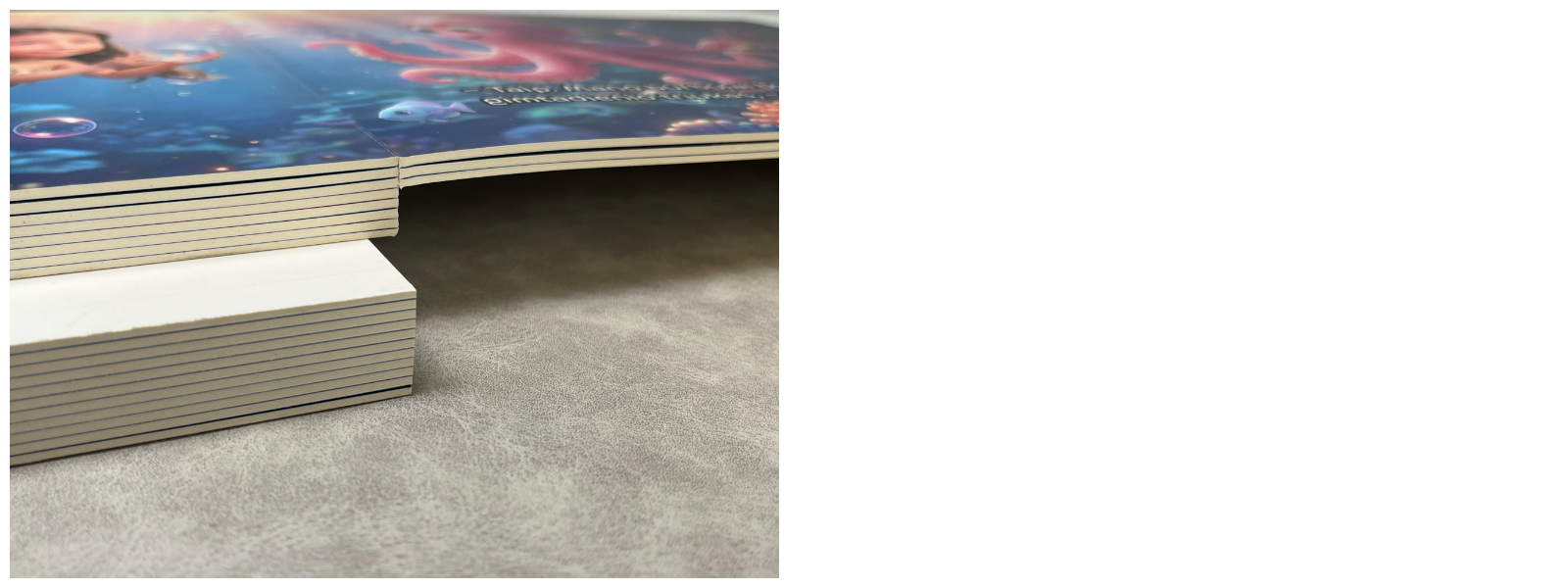
A format limit costs you the order, and no second machine fixes a job the first one cannot hold. The SU5000 takes 6×8 to 18×25 inches and blocks of 6–70 mm; the QHFS1860 covers 6×6 to 18×18 inches and stops at 40 mm with inserts.
· 6×6 or 8×8 minilab books: QHFS1860 — the SU5000 starts at 6×8.
· 11×14, 12×18 in or panoramic spreads: SU5000, and there is no workaround.
· Blocks of 50–70 mm: SU5000; 40 mm is the QHFS1860 ceiling.
Three-Side Trimming: Where Your Rework Comes From
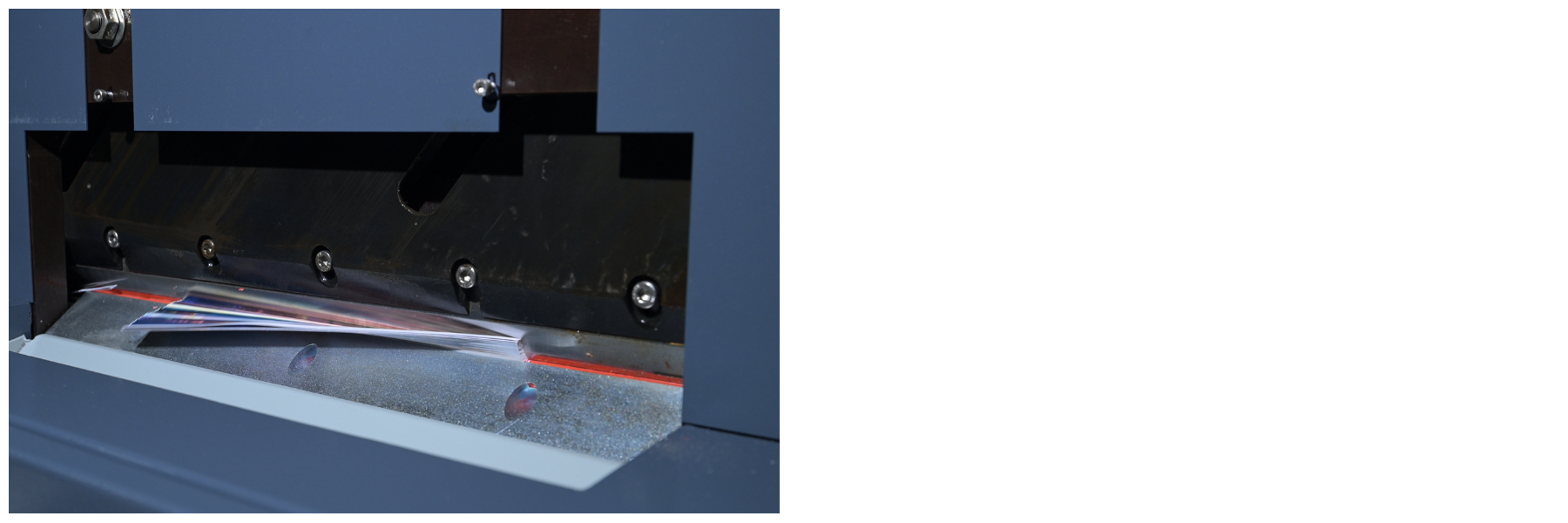
Trim decides whether an album looks bought or built. On the SU5000 the three-side trimmer sits inside the line, so head, tail and fore-edge are squared in the same pass as pressing. On the QHFS1860 trimming is off-line: a second machine, a second operator, and a second chance for two books from one order to come out a millimeter apart.
Real Workshop Conditions: What to Check Before You Sign
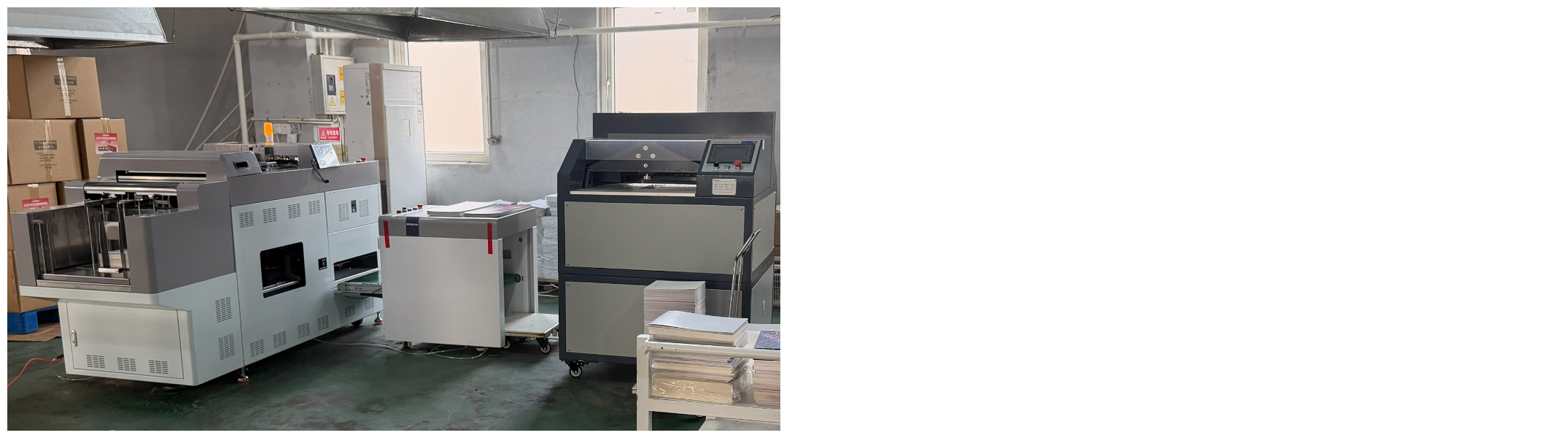
Spec sheets are written in a laboratory. Your floor is a rented unit, a mezzanine or a warehouse built for other machinery.
Floor and access
6.6 m² at 1,500 kg against 2.2 m² at 650 kg. Measure the door before the footprint — forklift access decides whether either machine gets in. On an upper floor, have the 1,500 kg signed off by an engineer.
Power and humidity
3–3.5 kW is nothing; the supply type is everything. On 208–240 V or three-phase, confirm the wall supply and any transformer before the container ships. Humid workshops curl paper and jam the feeder; dry heated ones build static and double-feed sheets.
Problems You Will See on the Floor
· Borders wander across a spread: registration drifted while feeding; test your lowest-contrast images first.
· Bubbles after pressing: glue temperature, dwell time or paper moisture — usually moisture.
· Blocks will not lie flat: outside the insert structure or the thickness ceiling.
· Rejects at the guillotine: off-line trimming puts a person between two operations.
Price: What the 30% Buys You
The SU5000 costs about 30% more, and the premium buys minutes rather than features: no separate trimming stage, fewer touches per album, plus formats the QHFS1860 cannot make. It pays back at 2,500 albums a month or on two shifts; at 600–900 on one shift you would be paying for capacity you never feed.
Which Machine Fits Which Business
Your situation | Recommended | Why you would choose it |
2,500+ albums/month, two shifts, 10×10–12×12 in | SU5000 | Capacity runs continuously; labor per block falls |
11×14, 12×18 in or panoramic spreads | SU5000 | Beyond the 18×18 in envelope |
Luxury albums with 50–70 mm blocks | SU5000 | QHFS1860 stops at 40 mm with inserts |
Minilab, 6×6–8×8 in, 500–1,500 albums/month | QHFS1860 | Covers the range at lower cost in 2.2 m² |
New entrant, tight space and budget | QHFS1860 | Low entry cost; add units as volume grows |
Where the Book Block Fits in Your Photo Album Production Line
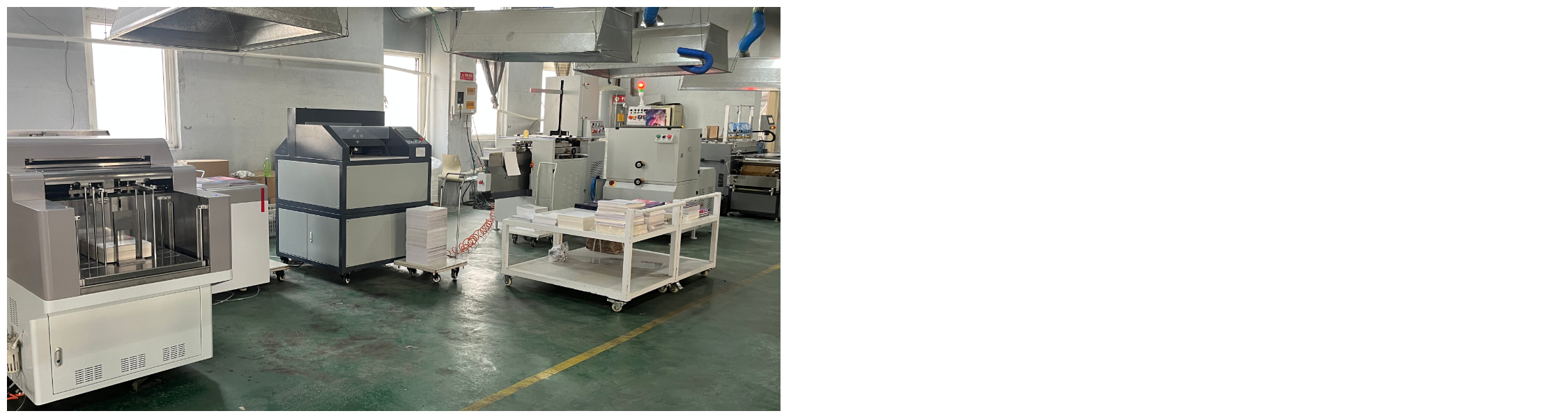
You are buying the middle of a photo album production line, not the whole of it: printing upstream, block production and trimming here, case making and casing-in downstream. Both are automatic photobook making machines for the inner core only, so plan the case, the casing-in press and the materials — photo paper, 12–15 g/m² inner sheets, cardboard, PVC and hot melt — at the same time.
Find the Right Photo Album Production Setup with Double100
The right machine depends on more than rated speed or purchase price. It needs to match the album sizes you produce, the book block structures you work with, and the output your business needs to maintain.
At Double100, we work with both the SU5000 and QHFS1860, alongside the materials and finishing equipment used in LayFlat photo album production. Share your typical album specifications and current production requirements with our team, and we can help you compare the two machines, identify the configuration that fits your workflow, and plan the next steps for your production line.